

You rely on your senses to navigate danger rat repellent sound, and so do rats—only their methods are finely tuned to survival. By understanding how rats use smell and sound to detect threats, you can better grasp why certain repellents work. These repellents exploit innate instincts, triggering avoidance behaviors that protect both property and the animals themselves. But what exactly makes some smells and sounds effective deterrents while others fall short?

How Rats Use Their Senses to Detect Danger
Although rats rely heavily on their acute senses, they primarily use their whiskers, smell, and hearing to detect danger in their environment. You can understand that their whiskers act as tactile sensors https://igreenasia.com/, allowing them to navigate confined spaces and sense nearby threats without relying on sight.
Their olfactory system is highly developed, enabling them to identify predators or harmful substances through scent cues. Additionally, their hearing detects high-frequency sounds beyond human perception, alerting them to approaching threats.
You’ll notice that rats integrate these sensory inputs rapidly, triggering survival responses such as freezing or fleeing. By recognizing how rats perceive danger through these senses, you can better appreciate the precision of their survival mechanisms and how they maintain autonomy in hostile environments.
Why Certain Smells Repel Rats From Homes and Businesses
Because rats rely heavily on their olfactory system to navigate and assess their environment, certain smells can effectively deter them from entering homes and businesses. You’ll find that compounds like ammonia, peppermint oil, and predator urine emit volatile chemicals that rats instinctively associate with danger or uninhabitable conditions.
These olfactory cues trigger avoidance behaviors by activating specific receptors in the rat’s nasal epithelium, signaling potential threats. By leveraging these natural repellents, you create an environment that rats perceive as hostile, reducing the likelihood of infestation.
Understanding this chemical communication allows you to implement targeted strategies without relying on harmful toxins, preserving your freedom to maintain safe, rodent-free spaces efficiently and sustainably.
How High-Frequency Sounds Disrupt Rat Behavior
Smell isn’t the only sensory cue that influences rat behavior; sound also plays a significant role. High-frequency sounds, typically above 20 kHz, are often inaudible to humans but can cause discomfort or disorientation in rats. When you expose rats to these ultrasonic frequencies, their communication and navigation abilities become impaired.
This disruption hinders their ability to locate food or detect predators effectively. Scientific studies show that continuous exposure to such sounds can reduce rat activity levels and encourage avoidance of treated areas. However, the effectiveness depends on factors like sound intensity, frequency range, and environmental conditions.
How Survival Instincts Make Rats Avoid Threats
When rats perceive potential danger, their survival instincts trigger rapid behavioral adjustments designed to minimize risk.
You observe that rats rely on heightened sensory inputs—olfactory, auditory, and tactile—to detect threats early. These instincts prompt immediate avoidance behaviors, such as freezing, fleeing, or seeking shelter, which increase their chances of survival.
You recognize that their neural circuits prioritize threat assessment, enabling quick decision-making under uncertainty. This adaptive response reduces exposure to predators and harmful stimuli, demonstrating an evolved mechanism deeply embedded in their cognition.
Understanding these instinctual behaviors helps you see why rats avoid unfamiliar or threatening stimuli, including certain odors and sounds. Their survival-driven aversion isn’t random but a precise biological strategy ensuring their persistence in diverse environments.
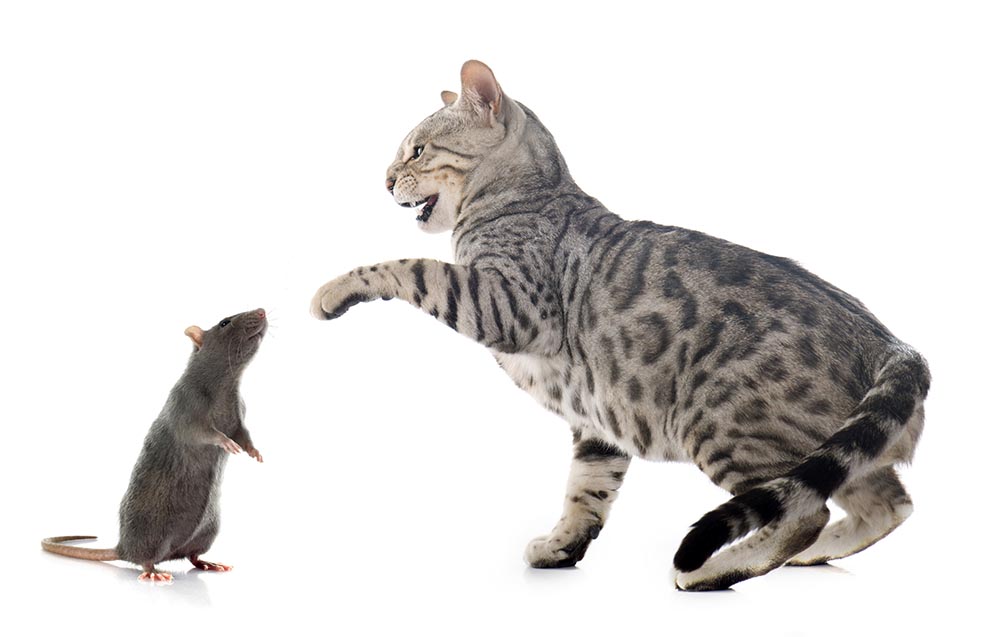
How to Choose Effective and Humane Rat Repellents
Although rats exhibit strong survival instincts that drive them away from threats, choosing an effective and humane repellent requires understanding their sensory sensitivities and behavioral patterns. You should prioritize repellents that exploit rats’ acute olfactory and auditory systems without causing harm.
For instance, natural scents like peppermint or predator urine can trigger avoidance behaviors, while ultrasonic devices may disrupt their communication. Evaluate products based on scientific evidence of efficacy and minimal environmental impact.
Avoid toxic poisons or inhumane traps that compromise animal welfare and ecological balance. By selecting repellents that respect rats’ natural behaviors, you maintain ethical control while preserving freedom for all species.
Ultimately, your choice should balance effectiveness with compassion, ensuring you manage infestations responsibly and sustainably.
Conclusion
You can effectively deter rats by understanding how their senses detect threats. Using specific smells like peppermint or predator urine activates their nasal danger signals, while high-frequency sounds disrupt their communication and navigation. These stimuli trigger innate survival instincts, causing rats to freeze or flee. By choosing repellents that combine olfactory and auditory cues, you employ humane, nonlethal methods that balance pest control with animal welfare, ensuring a scientifically sound approach to rat management.